Vision Board
What Is a Vision Board? A Beginner's Guide to Making One That Actually Works
It's a quiet Sunday evening. You open an old note from last January, a list of everything you wanted this year, and most of it never happened.
I have been there. I built Fred because I kept setting big goals and then losing sight of them by March.
A vision board is one of the simplest ways to keep that picture in front of you. If you've never made one, this guide covers what it is and whether it works. It also shows how to build one that leads to real action instead of a collage that gathers dust on a shelf.
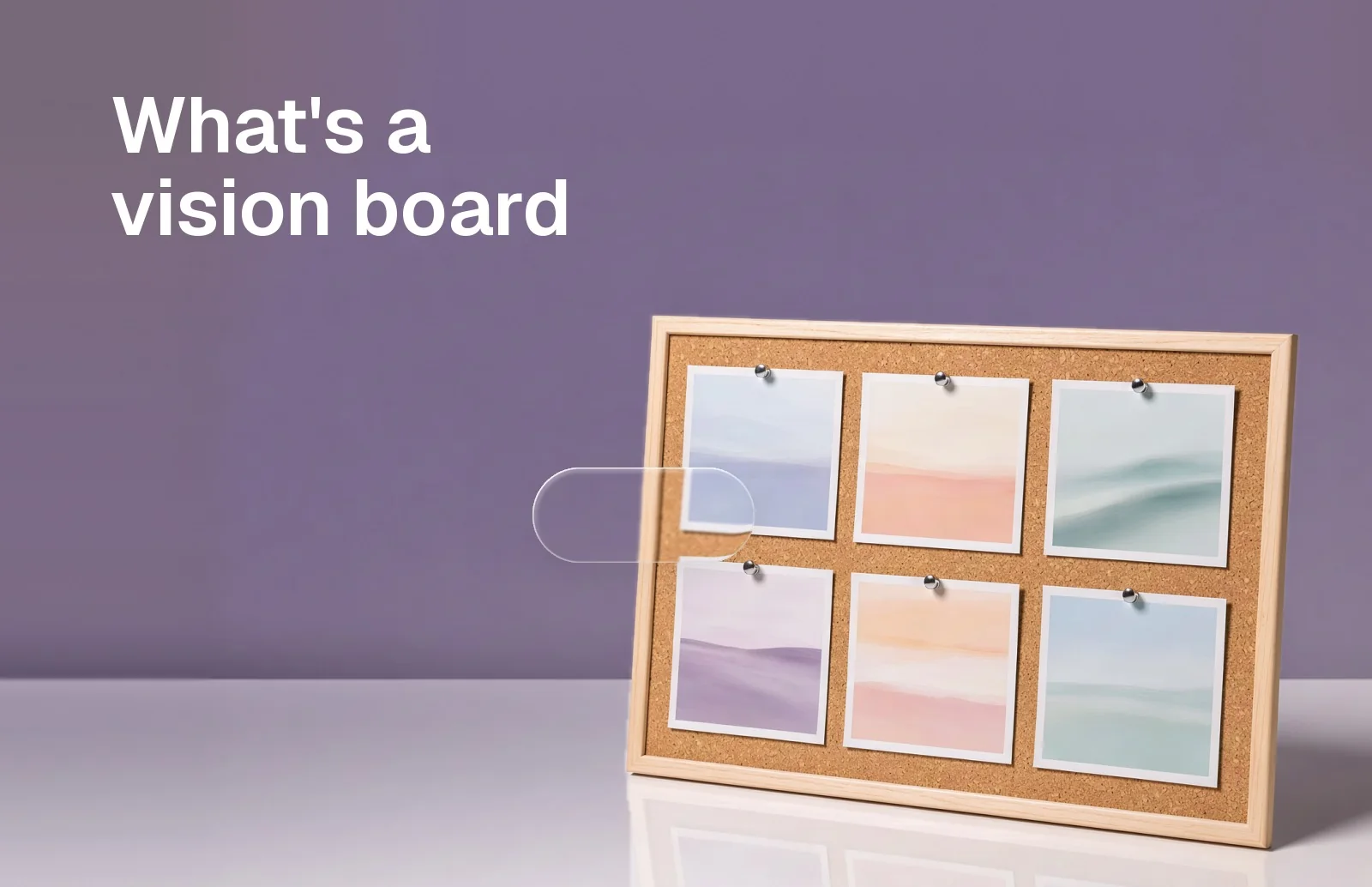
What is a vision board?
A vision board is a collage of pictures and words that shows the life you want. You gather images and quotes that match your goals, then put them somewhere you'll see them often. People also call it a dream board or an inspiration board.
Its job is simple. It keeps your goals in sight and reminds you what you're working toward when a busy week pulls your attention away.
Vision comes before goals. The board keeps the big picture close. It is the feeling you are moving toward, and the goals are how you get there. That is why vision boards matter before you plan anything else.
Do vision boards actually work?
Here is my honest answer. A vision board on its own is not magic. The habits behind it are real. It works when the picture points to a goal, and the goal points to a step you can take this week.
I separate the useful part from the hype. The useful part is clarity. The board keeps the dream where you can see it. Fred can plan the path.
The overhyped part is "manifestation," the idea that staring at a board pulls things toward you. Seeing your goals helps, though you still have to do the work.
There is some encouraging survey data too. In a TD Bank vision board survey reported by Forbes, 82% of these small business owners found that they have accomplished over half of their business goals since they began.
The science of seeing your goals
Visualization means picturing an action in your mind in vivid detail. Your brain responds to that imagined practice more than you might expect.
This comes from Ranganathan and colleagues (2004, Cleveland Clinic). In a mental imagery study, the participants that mentally concentrated on the imagery of flexing the finger increased strength by 13.5%. They gained real strength without moving a muscle.
Writing your goals down matters too. In a Dominican University goals study led by Dr. Gail Matthews, those who wrote their goals accomplished significantly more than those who did not write their goals.
A vision board sits right between these two ideas. It lets you see your goals and write them down in the same place.
What to put on a vision board
Start with your goals first, then find pictures that match them. Ask what you actually want this year, and let the images follow.
Common areas to think about are career, health, money, relationships, learning, and hobbies. You don't need all of them.
- Key point: Tie each image to a goal. A kitchen photo can mean "Cook dinner four nights a week" on your plan.
- Key point: Add words that steady you. A short line you believe can do more work than a pretty stock photo.
- Key point: Keep it to this year. A board of everything turns into noise, so choose what matters now.
- Key point: Leave some empty space. Room to breathe keeps the board clear instead of cluttered.
It also helps to choose realistic goals so the board feels possible rather than like pressure.
How to make a vision board, step by step
You don't need craft skills or a free weekend. Here are five short steps.
- Get clear on your vision for the year. You can plan your year around one simple theme.
- Gather your images and words. Pull from your own photos or from anywhere online.
- Arrange them so related pieces sit together and tell a small story.
- Put the board where you'll see it, like a wall or your phone lock screen.
- Connect each piece to a real goal. This is the step most guides skip.
That last step is the whole point. An image with no goal behind it is just decoration.
Physical vs. digital vision boards
Both kinds of boards work. A physical board is something you can touch, though it's easy to stop noticing once it's on the wall. A digital board travels with you and updates in seconds.
| Question | Physical board | Digital board |
|---|---|---|
| How it feels | Hands-on and tactile | On your phone or laptop |
| Updating it | Slow, you rebuild it | Fast, change it anytime |
| Where you see it | Fixed to one spot | With you everywhere |
| Link to goals | Separate from your plan | Can live next to your goals |
When a physical board makes sense
A physical board is great for a hands-on ritual. Set aside a craft afternoon, then cut out images and pin them to a wall you pass every day.
The downside is simple. Once it's on the wall, it fades into the background and gets easy to tune out.
When a digital board makes sense
A digital board makes sense if you want to carry it with you and adjust it easily on the rare occasion the year calls for it. It can also live next to your goal system, which is the real advantage.
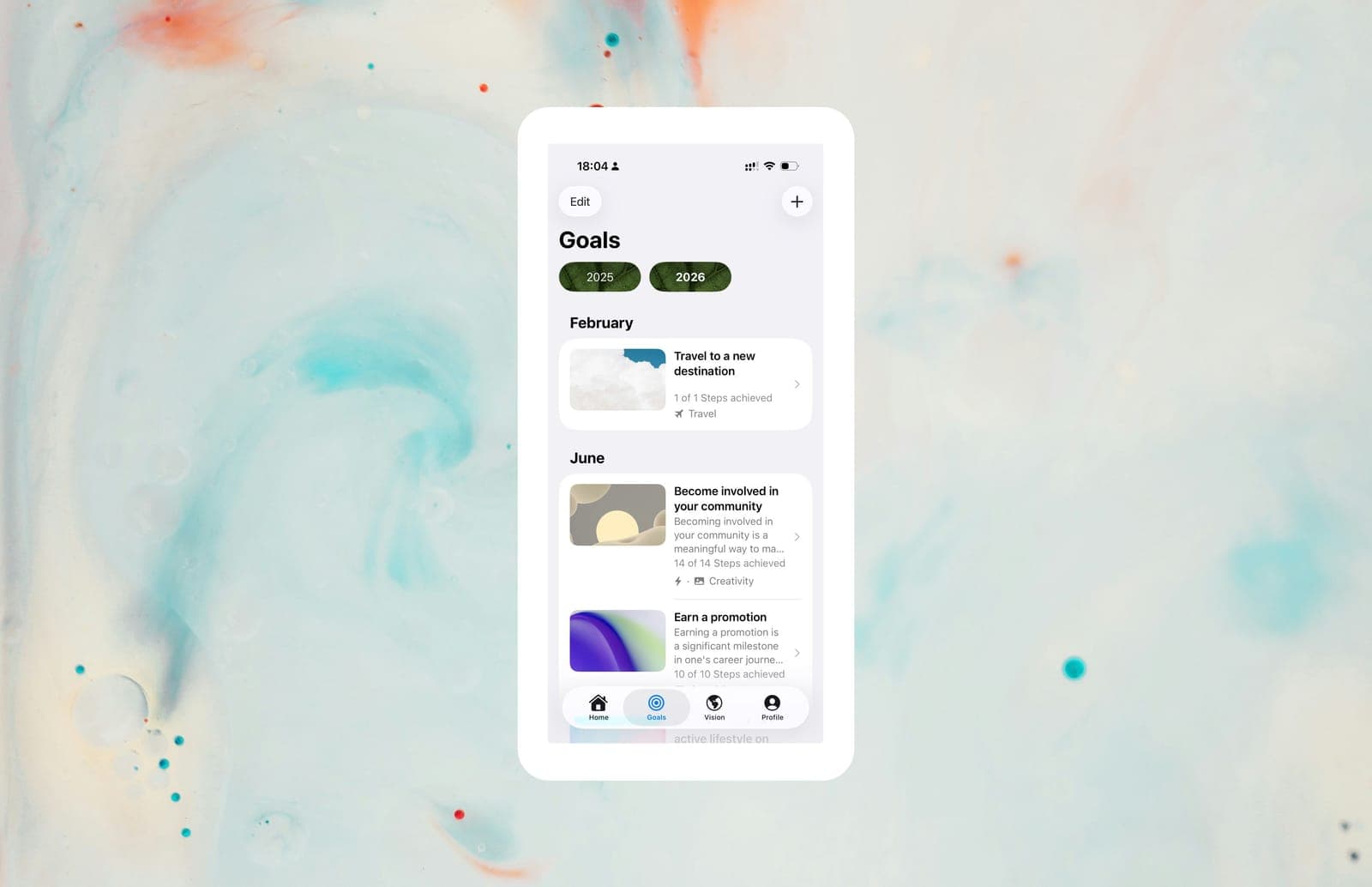
This is where Fred AI helps. You describe a goal in plain words, and it suggests a set of steps to reach it. See how Fred AI goal steps turn a vague goal into a clear next move.
Turn your vision board into real progress
Your board is a place, not a task. It holds the tone and the intention you want the whole year to have, and it sits there quietly whenever you need reminding what you're aiming at.
That's what makes it the foundation. Before you decide what to do this month, you decide what the year is for. The board holds that answer, so every monthly goal you set has something to point back to.
So when a new month starts, open the board first and ask what moving toward that picture would look like over the next four weeks. A board about building something of your own might become "Find my first three clients" this month, and something different the month after. The goals change. The board mostly doesn't.
Set the board once for the year, then leave it be. A check-in around the middle of the year is usually enough to adjust it if your life has genuinely shifted. Your monthly goal reviews do the frequent work, so the board can stay steady.
Conclusion
A vision board is powerful when it points to action. On its own it's a nice picture. Tied to your goals, it becomes a map you can follow.
You don't need the perfect board. Pick two goals that matter to you, and start with a few images this week. Small is fine.
Start with Fred today
This is what I built Fred for. The vision board keeps the big picture close. The goals for the month turn that picture into something you can chase, and Fred breaks each goal into concrete steps, generated for you and ready to start.
You do not need a perfect board. A few images, one or two goals, and the next step are enough. Start with Fred today. The free plan includes up to four goals.
Frequently asked questions
A vision board is a collage of pictures and words that show the goals and life you want. People also call it a dream board or an inspiration board.
Add images and words tied to specific goals across the areas that matter to you, such as your career or your health.
They help most when you pair them with clear goals and real action, rather than expecting the board alone to change anything.
Use whichever one you'll actually look at, and pick digital if you want it connected to your goals.
Once a year is usually enough, since the board is meant to hold the tone of the whole year. Add a mid-year check-in if you want, and adjust it only when your life or your priorities have genuinely changed.